





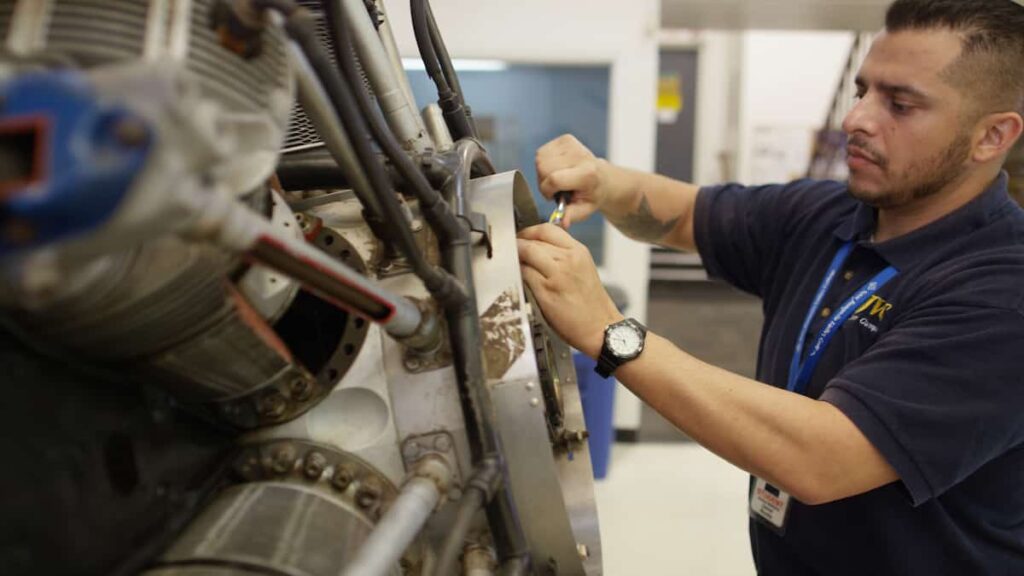
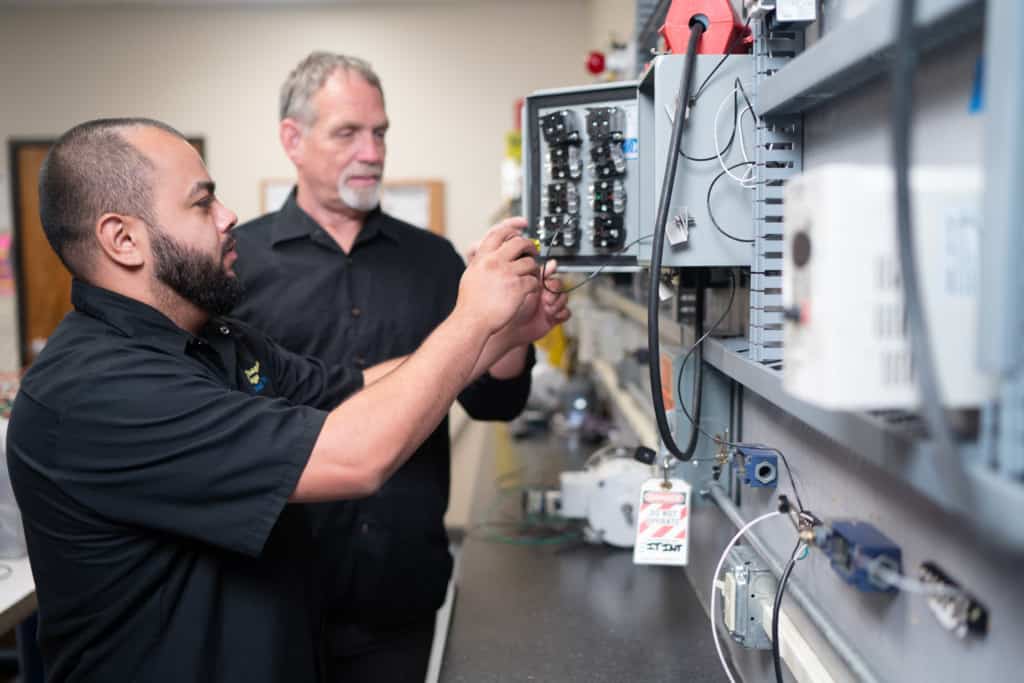



If you’re exploring industrial mechanic jobs, you may be wondering what the role involves and where it can lead. Industrial mechanics, also called industrial machinery mechanics, install, maintain, troubleshoot, and repair equipment used in manufacturing and production environments. Their work keeps machinery operating safely and efficiently. (1)
If you’re interested in training for this type of work, the San Joaquin Valley College Maintenance Technician program offers instruction designed to help students build foundational skills in mechanical and electrical systems. Keep reading to see where this career can take you.
If you’re new to the field, you can learn more in SJVC’s Industrial Maintenance Mechanic Career Guide. Keep reading to see where this career can take you.
Top Careers for Industrial Mechanics
Many industrial mechanics in this field start with a core understanding of industrial machinery maintenance. They can then move to specialized roles depending on industry, facility type, and experience level. The following occupations are closely related or commonly associated with industrial maintenance work.
Industrial Machinery Mechanics
These professionals repair, maintain, and adjust production machinery. They focus on diagnosing mechanical problems, replacing components, and performing preventive maintenance on equipment such as conveying systems, production machinery, and packaging equipment. (1)
Maintenance Technician
Technicians who perform essential diagnostics and routine repairs to keep factory and production machinery running smoothly. Daily tasks include testing equipment performance, cleaning components, and using hand tools such as socket wrenches and screwdrivers to replace or calibrate parts, while following strict industrial safety protocols. (2)
Heavy Machinery Mechanic
Heavy equipment mechanics specialize in large-scale equipment used in construction, farming, and rail transportation. They disassemble massive engines and transmissions, overhaul hydraulic systems, and perform complex diagnostic tests. This role involves interpreting technical manuals and using specialized tools, like welding equipment and hoists, to maintain operational safety and structural integrity.
Automation Technician
Automation technicians are the bridge between mechanical systems and digital control. These technicians install, program, and repair “smart” industrial equipment, often working with sensors, robotics, and Programmable Logic Controllers (PLCs) that drive automated environments like semiconductor fabs and pharmaceutical plants. (2)
Facilities Maintenance Technician
These versatile professionals are responsible for the general upkeep and emergency repair of residential, commercial, or industrial properties. Their work involves a broad mix of trades, including basic plumbing, electrical troubleshooting, carpentry, and HVAC upkeep, to ensure a building’s infrastructure remains safe and functional.
Field Service Technician
Field service technicians travel to customer sites to manage equipment that cannot be moved to a repair shop. They perform on-site installations and repairs for everything from medical imaging hardware to telecommunications towers, combining mechanical expertise with client communication and digital service reporting.
Production Supervisor
With experience, some industrial mechanics move into supervisory roles. Production supervisors oversee machine operators and coordinate maintenance scheduling to support operational efficiency and workplace safety.
Machine Operator
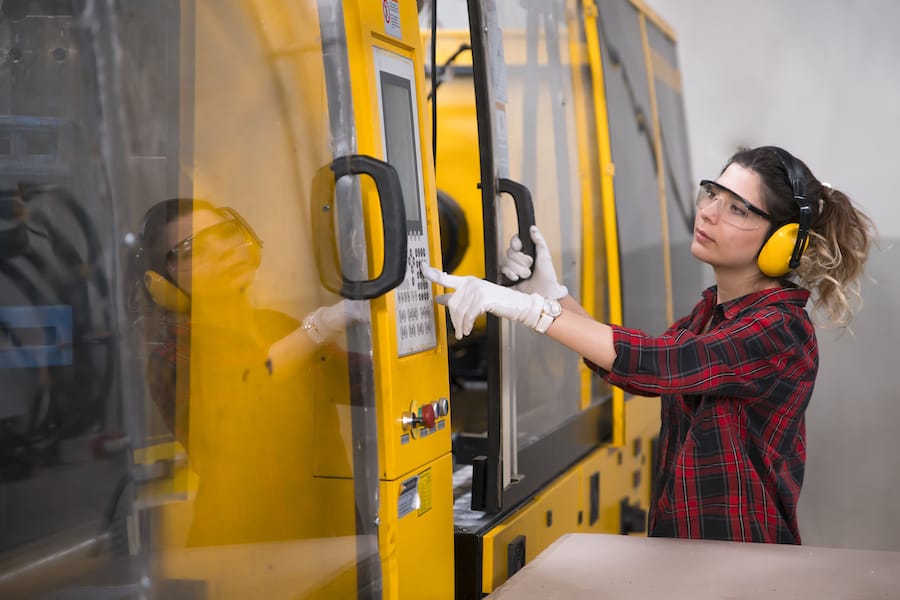
Machine operators set up and run manufacturing equipment. In many facilities, industrial mechanics work closely with operators to troubleshoot equipment issues and minimize downtime.
Industries that Hire Industrial Mechanics
Potential industry opportunities for industrial mechanic jobs can include: (5)
- Manufacturing
- Automotive manufacturing
- Aerospace products and parts manufacturing
- Commercial and industrial equipment repair and maintenance
- Food production and processing facilities
- Warehousing and distribution centers
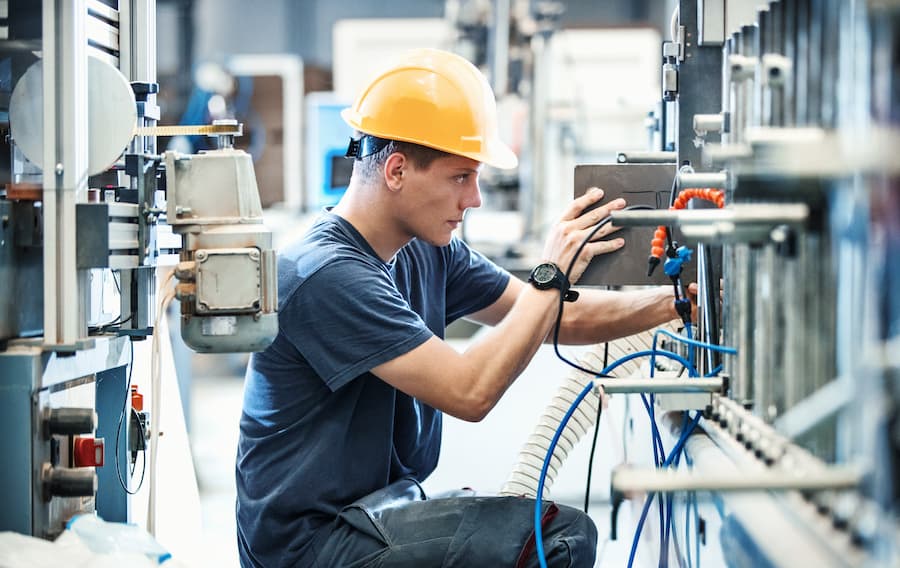
Because modern production relies almost entirely on complex machinery, industrial machinery mechanics are needed across a wide range of industries that depend on equipment operation and maintenance. (5)
Industrial Maintenance Careers in California
California has a large manufacturing sector that employs industrial machinery mechanics in a variety of facilities across the state. (3) From the high-tech hubs of Silicon Valley to the distribution centers in the Inland Empire, skilled professionals help maintain complex equipment, enforce safety protocols, and minimize costly downtime.
Training and Key Skills for Industrial Mechanics
If you’re asking if industrial maintenance is a good career, understanding the training requirements is a helpful first step. Most entry-level roles expect a solid grasp of several core disciplines: (1, 2)
- Mechanical systems
- Electrical fundamentals
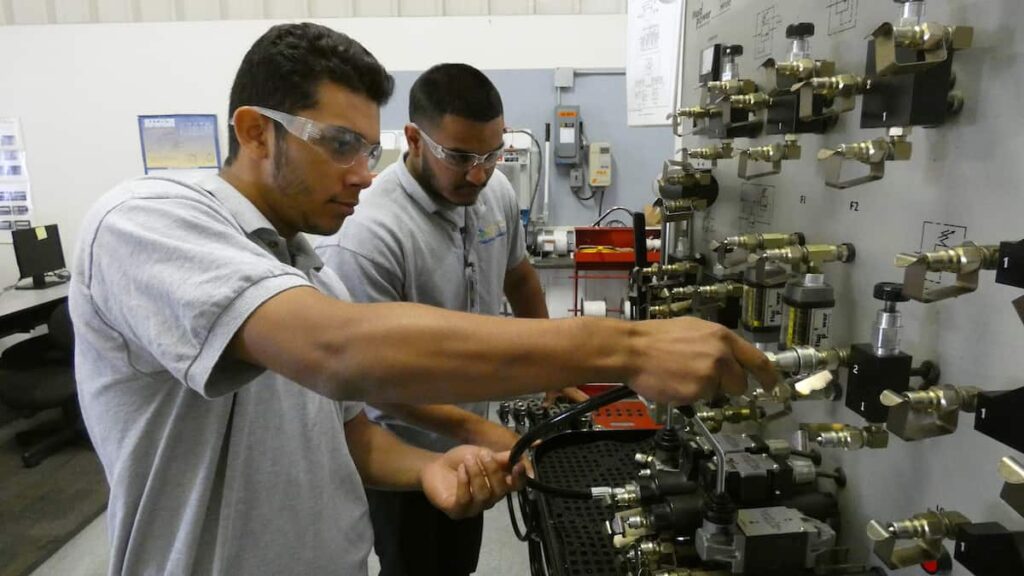
- Hydraulics and pneumatics
- Preventive maintenance procedures
- Workplace safety standards
Structured training programs can help students build these skills through classroom instruction and hands-on lab practice.
To prepare for real-world settings, SJVC’s Maintenance Technician program provides training designed to help students develop core competencies in mechanical and electrical systems. (4)
Additional Industrial Mechanic Certifications
Some professionals choose to pursue additional credentials (not offered by SJVC), such as:
- OSHA safety certification
- PLC training certificates
- Equipment-specific manufacturer training
These certifications may help expand technical knowledge depending on career goals.
How Many Years Does it Take to Become a Maintenance Technician?
The time it takes to become a maintenance technician depends on your chosen educational route, with options ranging from under a year to several years. In California, students can build their careers through certificate programs like the one at SJVC in as little as seven months, (4) while those pursuing an associate degree or a formal apprenticeship can expect to spend several years in training.
Get the Skills Needed to Pursue an Industrial Maintenance Career
If you’re exploring industrial mechanic jobs or considering a career change, building foundational training in mechanical and electrical systems is often the first step.
SJVC’s Maintenance Technician program offers structured instruction and hands-on experience designed to prepare students for entry-level roles in industrial machinery maintenance.
Build foundational skills that can help you prepare for work in this field. Learn more about SJVC’s Maintenance Technician program now.
References
- U.S. Bureau of Labor Statistics. “Industrial Machinery Mechanics, Machinery Maintenance Workers, and Millwrights.” https://www.bls.gov/ooh/installation-maintenance-and-repair/industrial-machinery-mechanics-and-maintenance-workers-and-millwrights.htm
- O*NET Online. “Industrial Machinery Mechanics (49-9041.00).” https://www.onetonline.org/link/summary/49-9041.00
- California Employment Development Department. “California Manufacturing Report.” https://labormarketinfo.edd.ca.gov/specialreports/california-manufacturing-report.pdf
- San Joaquin Valley College. “Maintenance Technician Program.” https://dev.sjvc.edu/program/maintenance-technician/
- Data USA. “Industrial Machinery Mechanics.” https://datausa.io/profile/soc/industrial-refractory-machinery-mechanics